Stairs are the enemy of every move. They're where furniture gets gouged, walls get scuffed, and weekend movers end up nursing a sore back for a week.
Most of the damage and most of the injuries come down to the same handful of mistakes. Get the technique, the gear and the planning right, and even an awkward upstairs lift becomes manageable.
Here's how a removalist who has done it for nearly two decades approaches a staircase, and the honest line on when you should stop and call someone.
The short version
- Clear and measure the whole path, including the landing turn and the door at the top, before lifting.
- Lighten the load: remove drawers, doors and cushions first.
- The person at the bottom carries the most; keep the item close and never twist.
- Straps, a stair trolley and blankets do the work that strength shouldn't.
- Pianos, pool tables, marble and oversized items are a job for a removalist.
Plan the path before you lift a thing
Half the battle is won before anyone picks anything up. Walk the route first and clear it completely.
Measure the item and the tightest point of the staircase, including the turn at the landing, the doorway at the top and any low ceiling. A piece that fits the stairs but not the door at the top is a classic trap.
- Remove doors off hinges if they pinch the landing.
- Take out drawers, shelves and loose cushions to cut the weight.
- Lay down old blankets or cardboard to protect the treads.
- Clear handrails, rugs and anything you could trip on.
Lift with technique, not ego
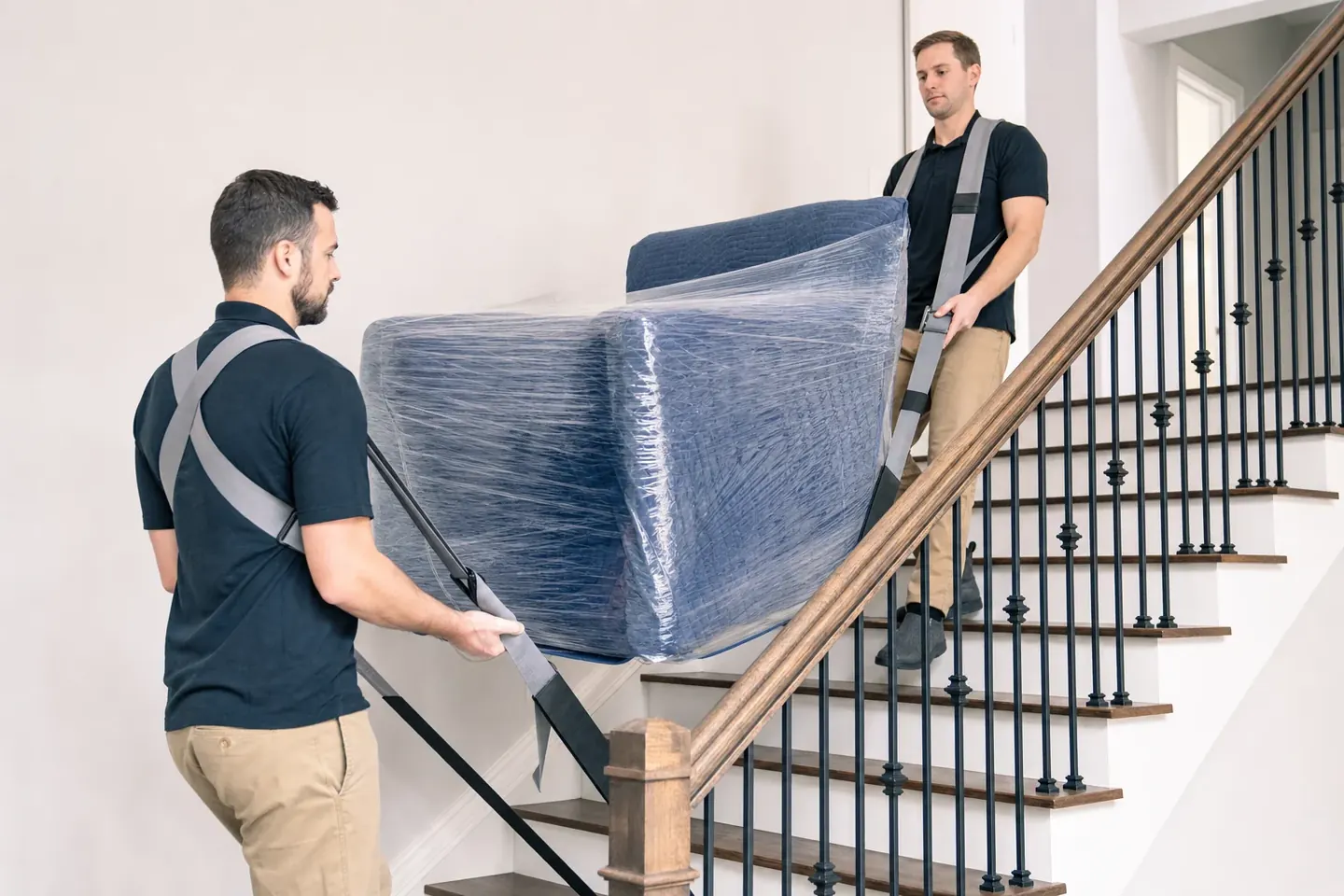
The person at the bottom of the stairs carries the most weight, always. Keep the heavy end low and let gravity work with you rather than against you.
Bend at the knees and hips, keep the load close to your body, and never twist while loaded. Move in slow, communicated steps; the words "ready, lift" and "step" said out loud prevent most accidents.
If you're straining to hold it still, it's too heavy for the team you've got. Stopping to get another person or the right strap is never the wrong call.
Use the right gear
Professionals make stairs look easy because they're not relying on raw strength. The gear does the hard part.
- Moving straps and a shoulder dolly shift the load off your back.
- A stair-climbing trolley walks heavy items down step by step.
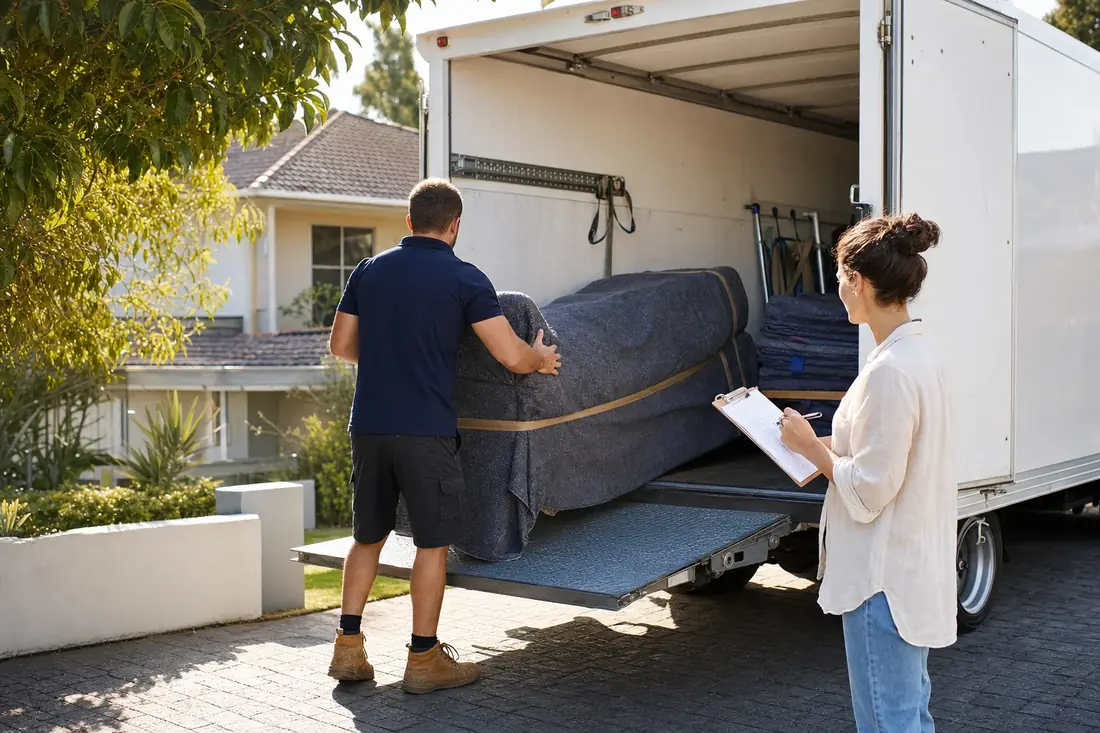
- Furniture blankets and stretch wrap protect both the item and the walls.
- Felt sliders help reposition pieces at the top and bottom.
- Sturdy, closed-toe shoes with grip; thongs and stairs do not mix.
Know when to call a removalist
Some items simply aren't a DIY job up a staircase. Pianos, slate-bed pool tables, marble tops, large safes and oversized wardrobes carry real risk to you, the item and the building.
A removalist brings the crew, the straps, the stair trolley and the experience to read a tricky lift before it goes wrong. After 19 years, this is exactly where Francis earns his keep, and a balcony crane lift is on the table when the stairs simply won't work.
Frequently Asked Questions
Two is the minimum for most items, and three is safer for anything tall, wide or over about 60 kilos. If you're unsure, that's a sign it's worth bringing in a removalist with the right gear.
Yes, but it's specialist work. Pianos need the right trolley, straps and trained hands, and sometimes a balcony or crane lift is safer than the stairs. It's not a DIY job.
Lay blankets or cardboard on the treads, wrap the furniture, take doors off where they pinch, and move slowly through the tight points. Corner guards on the walls help on narrow landings.